There’s a saying in basketball that, if you want to understand how a team’s offense works, don’t watch the player who brings the ball up the court. Watch instead where and how his teammates move.
That may be an overwrought way of saying that something needing attention is “off” or “under the radar,” but it does imply that things are still visible, if only we look.
And that they are done in concert with the things that dominate the radar and keep our attention. Those four players go where they can receive a pass, set a screen, create an open lane, or grab a rebound.
For instance, we all heard of–and most of us heard and saw–actor Matthew McConaughey’s passionate call for gun control legislation days after the school shooting in his native Uvalde, Texas.
Few, however, heard what happened when he finished and started to leave the press conference. And those who did hear it likely thought it was a fluke when a reporter for Newsmax, a Trumpian Fox-wannabe, yelled out a question:
“Sir, are you grandstanding?”
Reports from actual news sources and postings from social media rarely mention this, and none that I have found include McConaughey’s reaction. He may not have heard it, though my saying so may be just wishful thinking.
On another team, that reporter was a player without the ball, but his question was very much on the court. No fluke, it always has been and will continue to be crucial to the right-wing game-plan.
With the ball are those who had already dismissed Sandy Hook and Parkland as false flags and the survivors as “crisis actors.” Anyone calling for common sense remedies–from Democratic senators to basketball coaches to columnists in small town newspapers–will be accused of “playing politics” or “grandstanding.”
For an Oscar-winning actor (Dallas Buyers Club, 2013), it goes deeper. As Dan Rather, another Texan, quipped:
I love how the people dismissing Matthew McConaughey as a “celebrity” fawn over the man who presided over Celebrity Apprentice and hail Ted Nugent as, well, a celebrity.
No one believes it. Not even those who say it on Fox or Newsmax or OAN or on hate-radio. That’s why neither irony nor contradiction register with them. I doubt that their audiences believe it. No rational person could possibly take the accusation literally.
Instead, such claims serve as anesthesia. That’s why there are so many, and why they are constantly repeated. Dismissing McConaughey allows them to dismiss Uvalde, every shooting that preceded it, and every one sure to follow.
The Newsmax reporter didn’t have the ball when he positioned himself to incite the actor in hopes of drawing a foul. But he figured that with all eyes on McConaughey, his real intent would go unnoticed.
His use of “sir” was a nice, if cynical, touch. Bob Cousy might have called it “finesse.” Larry Bird would have called it “bait.”
That’s what a team does when it has no offense other than forcing mistakes, cashing in on mistakes, and running out the clock till the next election until which it hopes it has kept enough people fooled enough of the time.
You want background checks, waiting periods, bans on automatic weapons capable of slaughtering a fourth-grade class before a proverbial “good guy” has a chance to respond?
Step One: Stop blaming “Congress” and “elected officials” for “not doing anything” and be more specific when assigning blame for inaction.
Step Two: Stop agreeing with or remaining silent when you hear or read anyone else blame “Congress” or “elected officials.” Ask them to name exactly who is to blame.
This may come as a surprise to those who make the blanket accusation, but Congress is not monolithic.
There’s a Senate with one hundred members, two from each state, and a House of Representatives with 435 distributed to states according to their population. Moreover, each is a combination of two political parties.
Once upon an attention span, I’d have thought that standard stuff in a fourth-grade history text, but judging from social media, I’m not sure that most Americans know the difference between federal and state government, let alone the twists and turns of a bi-cameral legislature and a two-party system.
With this in mind, let’s get back to gun-control:
It is not all of “Congress” that is failing us. For starters, the House of Representatives has been passing the legislation we want for years, most recently this week. According to CNBC:
The Democratic-held chamber approved the legislation in a 223-204 vote. It passed in a mostly party line vote: Five Republicans supported the measure, while two Democrats opposed it.
Let’s spell this out for those who keep damning “Congress” and “elected officials”: Democrats voted for gun control, 218 to 2; Republicans against it, 5 to 202.
Here’s a sampling of other House votes these past two weeks:
An allocation for baby formula: Dems, 219 – 0; Repubs, 12 – 192
To lower the cost of insulin: Dems, 220 – 0; Repubs, 12 – 193
To stop oil & gas price gouging: Dems, 217 – 4; Repubs, 0 – 203
If any of those issues–or issues such as climate change and appointments to the Supreme Court–are important to you, take a look at those numbers before you condemn “Congress” or “elected officials”–and before you make another call for term limits.
At least one half of the House is on our side.
Same is true of the Senate. However, all of these and other bills have passed the House and now go to the Senate where they will be blocked, not by majority votes, but thanks to an arcane rule called the filibuster. Though the rhetoric of the Republican Party has succeeded in making many if not most Americans think that the filibuster is in the Constitution and, therefore, sacrosanct, it is not. Concocted by senators from the Southern states to suppress any discussion of slavery in the Senate before the Civil War, it now serves the political party that wants to block gun control, veterans benefits, lower costs for insulin, and all else.
For at least 14 years now, we have seen the Democrats bending over backwards for the sake of bi-partisanship, all while Republicans have done nothing other than obstruct.
By carelessly blaming the entire Congress for inaction, we reinforce a superficial view that leads nowhere but to despair, cynicism, and disengagement. That’s why, come the elections, it is only logical that the party which says government can be a force for good appears naive, out of touch, and simple-minded–while the party that makes government fail is then rewarded for calling it a failure.
We need to start specifying exactly who is doing exactly what. Not everyone who happens to be at the scene of a fire is an arsonist. Many are firefighters, and they would be far more effective if we’d just start making the distinction.
Until then, we might as well be supplying cans of fuel to those now intent on burning democracy down. Or, to put it literally, rounds of ammo to those who don’t mind seeing dozens of us shot up every few days.
When I spotted Republic of Detours in the “New Release” display in the library lobby, I assumed it had to be about current events.
In fact, I was immediately envious at not having thought of the metaphor myself. For all the talk about “road maps” to describe the Democrats’ attempts at legislation, what could convey the fate of a watered-down Obamacare, voting rights, reproductive rights, measures to counter climate change and gun violence better than detours around the never-ending roadblocks to which the Republican Party keeps turning itself into?
As soon as I picked it up, I saw that it was American history, all about the Federal Writers Project (FWP) and the American Guides it produced for every state in the late 1930s. Author Scott Borchert’s subtitle puts it best: How the New Deal Paid Broke Writers to Rediscover America.
Fascinating stuff, and with references to other agencies–WPA, CWA, FERA, PWA, TVA, SEC, FDIC, CCC, ETC–you understand that the term “alphabet soup,” while later used to ridicule government bureaucracy, may well have been positive in real time, like a team motto for FDR’s New Deal.
Still, the story of the right-wing, red-scare moves to shut down the FWP is all too familiar. Many quotes echo Republicans today regarding what they call “culture wars.” One Dixiecrat called it “a splendid vehicle for the dissemination of class hatreds,” which is not far from the Texas state senator who blamed Critical Race Theory for the shooting in Uvalde “because it dominates what’s taught in our schools.”
Like the Guides, Republic of Detours is divided into tours putting us in the company of the editors and writers who had most to do with the project’s success–Vardis Fisher, Nelson Algren, Zora Neale Hurston (who had already written Their Eyes Were Watching God), Richard Wright (who would go on to write Native Son and Black Boy), Henry Alsberg–as well as with those who defended them, including Eleanor Roosevelt, and those who eventually tore them down, especially Texas Rep. Martin Dies, whose investigating committee was a forerunner of McCarthyism.
In the background of all six tours through 48 states looms, of course, FDR himself whose mind one historian describes as:
… a spacious, cluttered warehouse, a teeming curiosity shop continuously stocked with randomly acquired intellectual oddments.
Adds Borchert:
… which, as far as it goes, is not a bad description of the American Guides.
While the foremost mission of the FWP was to employ out-of-work writers during the Depression, those who led it hoped to create a product as useful as the roads and bridges built by the Civil Works Administration. Much of the material told the reader what could be found in each state and where to find it, what grew and when it was in season, what you could do and how to arrange it.
But there was more. The local music and poetry, outdoor and indoor games, legends and myths, churches and taverns, jokes and yarns. Between essays on a state’s Indian reservations and its public schools, you would find local recipes and weather almanacs. The idea, as one editor put it, was to “introduce America to Americans.”
Tempting to say that anything and everything went, but there were compromises. The Southern Guides, for instance, were ordered to use the term “War between the States” rather than “Civil War.” And the Massachusetts Guide offended Bay Staters who didn’t want the world reminded of the infamous Sacco & Vanzetti trial in 1921.
While Borchert admits in his prologue that they are “rich, weird, and frustrating,” his epilogue offers an unqualified endorsement. Reminding us that he was drawn to the subject by an eccentric uncle who collected the Guides, he compares them to “a conventional genealogy” by saying that they add much more, such as “a philosophy of history… a sense of possibility in how we might relate to the past and how we might sort through the things we’ve inherited from it…”
Conventional genealogy, however:
… can trace only a route of heredity and law, one that is sharply exclusive. It can’t be otherwise, of course, and such things are fascinating and worth knowing… But the philosophy that resides in this approach, at its very worst, is blood and soil, the fascist ideal. If the American Guides offer an opposing genealogy, it’s one that is open and inclusive, public, multitudinous. It doesn’t plug you into a hierarchy and affirm your place in the grand scheme of things; rather, it shows you different routes forking off in many directions and, like the old joke, simply says: take it. They all belong to you.
May have been a 300-page detour, but I knew all along it was about current events.
While kissing my children and gently pushing them toward the school bus door this morning, I was overcome with a sense of fear that I might not see them again. That this might be goodbye.
So began my daughter’s post on social media the day after. She continued:
My spouse asked if I was okay once the bus left, and of course I cheerly said “yes” because how do I say those words to him in that moment?
She may have said yes because she is “okay” in the sense that rest of us are okay. Except for the friends and families of those who were in that school–or supermarket, or church, or synagogue, or nightclub, or casino, or shopping mall, or cinema, or medical center–we carry on, we have no choice, our work must be done, we need our pastimes. Still, as she adds:
While nothing compared to the grief families in Uvalde and so many other towns whose names are now forever seared in our minds, parents are experiencing a shared trauma, grief, fear.
Despite being “okay,” Americans everywhere genuinely, deeply feel the pain of those in–let’s say their names–Uvalde, Buffalo, Newtown, Columbine, Parkland, El Paso, Dayton, Detroit, Pittsburgh, Charlestown, Blacksburg, Knoxville, Collierville, Orlando, Oakland, Oxford, Las Vegas, Santa Fe, Atlanta, Aurora, San Bernardino, and, as my daughter says, “so many” others.
“Okay” might as well be code for “grin and bear it” if the comment added by one of my daughter’s friends speaks for parents from coast to coast:
I had the same feeling waving to my daughter this morning at drop off. It should not be this terrifying. Nor should we have to act like we’re ok.
My daughter wasn’t done:
At the same time, we are also feeling a sense of hopelessness: we know based on what this country has done (NOT DONE) in the past, that nothing will happen this time, either.
Based on the recent past, her conclusion is undeniably true: Nothing will happen. In turn, that explains the hopelessness that most everyone I know has expressed this week, this year, this past decade or two. She does use one word there that I question, and she will use it again, with emphasis:
Except more of the in-class shooter drills that my kids began to do as early as 18 months while in daycare….
Our country doesn’t value life. It values control. Full stop.
My daughter was half the age of her own first-grader when the film Absence of Malice seared itself into the memory of every American journalist, veteran or upcoming. Especially its very last line when a newspaper reporter played by Sally Field was asked to verify a rumor and answered: “Yes, it’s true, but it’s not accurate.”
What my daughter and so many others are saying is accurate, but it’s not precise. And it is that imprecision that paralyzes us with feelings of hopelessness expressed in a comment added by another of her friends:
Yes, the horror of it keeps piling up deeper and deeper. When will we wake up as a nation and make real laws to control the ownership of guns like we do the ownership of cars like we do with so many other things?
It is not “the country” that “doesn’t value life.” Nor is it “a nation” that refuses to “make real laws.” Nor is it “Congress” or “elected officials” that “refuse to act” as so many others say with varying degrees of disgust and despair.
It is very specifically the Republican Party that has blocked federal gun legislation that has already passed the House–measures that have the support of near 80% of the American public–and gutted regulations in states they control.
All of which is just as true of reproductive rights, climate change, and voting rights. All of them blocked, not by “Congress,” but by half of it. Not by “elected officials,” but by half of them.
Until we make that distinction, until we are precise, and until we apply what is right in front of us to November elections, nothing will change. Full Stop.
Two days after it happened, I was consumed with the idea of targeting.
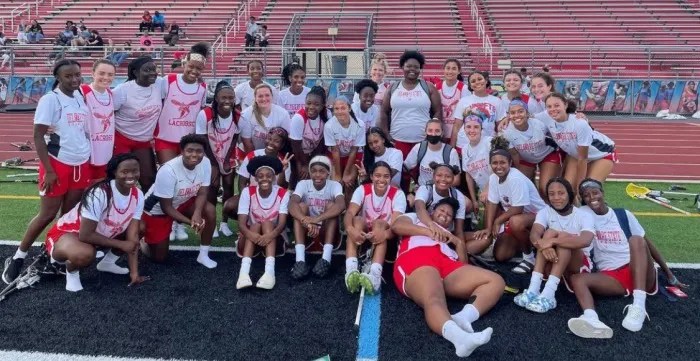
Perhaps what made Buffalo register for me more than other mass shootings was that I had just finished a blog about a bus being stopped in Georgia for a “traffic violation.” To compare bullets to traffic tickets may sound like apples and otters, but the bus was targeted just as the neighborhood and supermarket in Buffalo were targeted. The first by state police as an excuse to search the luggage of a predominantly Black women’s lacrosse team; the second by a shooter who drove past Syracuse and Rochester for the sake of a higher Black population density.*
Just as police who turn traffic stops into gunshots from coast to coast–Kenosha and Minneapolis being only those we hear of due to video sent to the press–most lone gunman are picky about their prey: An African-American church in Charlestown, a synagogue in Pittsburgh, a gay night club in Orlando, another several hundred-mile-trip to a Hispanic shopping center in El Paso, and so on.
Whether done by law enforcement or crazed individuals, the racial profiling is obvious. It’s the targeting that needs more attention.
Targeting isn’t done just with guns. Nor does it stop with racial profiling. Consider the laws that have been passed in Republican-controlled states since the Supreme Court gutted the Voting Rights Act in 2013. Most of them targeted at cities, enough of them at reservations. And who lives in cities and on reservations?
How about the laws those same states are now passing to restrict reproductive rights? Does anyone think they’ll stop women who are financially secure or well-connected from obtaining access to services? Those laws are targeted. And we know who the targets are.
All kinds of targets, including individuals. Numerous members of schoolboards, educators, and poll workers across the nation–of all races, ethnicities, and creeds–have been hounded out of office and at times out of their towns since the MAGA crowd contrived the idea of a stolen election. Prior to the 2020 election, a far-right militia plot to kidnap the governor of Michigan was foiled.
The Republican Party’s embrace of the MAGA crowd and of right-wing extremist groups such as QAnon has, in the parlance of the day, “normalized” this. Normalized is a euphemism. Endorsed would be the honest term. The MAGA crowd has endorsed bullying, harassment, intimidation, threats, and violence as political tools, and made them all acceptable. The Republican Party has seconded that endorsement.
If you think my inclusion of “violence” goes too far, you missed the calls of Republican office holders from Minnesota to Arizona for “Second Amendment remedies.” You didn’t see the heavily armed, family-photo Christmas cards sent by Republicans in Nevada, Colorado, and Kentucky. You thought Sarah Palin was just kidding with those crosshairs. News flash: Jokes don’t tell jokes.
Commonplace now, this has roots in the 1970s when an antigovernment survivalist group called Posse Comitatus emerged in the western states. In 1984, a Denver radio host was gunned down by an avowed neo-Nazi, someone who would have been deemed “very fine people” by a Republican president in 2017. As well as by his supporters–or at least neo-Nazis are accepted by his supporters. Since they are among his supporters, they have to be.
A year before Alan Berg’s assassination, I started writing columns for the Newburyport paper. Whether I fear for my safety as a result of voicing a view of American life that ranges between those of Bernie Sanders and The Chambers Brothers was an FAQ in the first few years–and again between about 2008 and 2013 when the paper allowed anonymous comments on-line.
Seems to me that anonymity is not to be feared, but ridiculed. However, I soon stopped taunting the trolls because it only made my friends and family even more nervous. Though I’ve had a lot of nasty stuff thrown at me, I’ve never been threatened. Nor have I worried. Or given it thought.
Until now. Now that hate has been so widely endorsed, what if a reader of the local paper decided he–they are all he–wanted in on the action, to serve the cause, to possibly become a MAGA hero or martyr, maybe have the police who make the inevitable arrest treat him to a shake and a burger before taking him to jail?
He wouldn’t need a Google search of “local targets” to find me.
A thumbnail photo of my face appears with every column I have in print, about every three-weeks. Working downtown and having written often about Plum Island, I’m easy to find. Walking and sitting in the refuge, I’m impossible to miss, and on weekdays there are very few people to bear witness.
Over the years, I recall just one occasion downtown, after dark, locking a door behind me with the pub next door nearly empty and no one else on the street, when two or three young men walked past and fell silent, though I always say hello. One shouted back, “Are you Garvey?” and he and his buddies started laughing. I learned long ago that you never answer a question–any question–asked by anyone who is walking away from you, but I did stop, stand still, and face them as they disappeared. While it is unnerving to hear your name used like that to the tune of unmistakably derisive laughter, it is invigorating to stand up to it.
On a Monday, two days after Buffalo, I was pondering this on a bench in the refuge when I heard a car approach. I laughed at the idea, but stiffened when I heard the car slow. I never turned around, not even when the car stopped directly behind me. For a fleeting moment I considered throwing myself straight ahead down a slight incline into the marsh, thinking the bench would shield me. No. I’d rather go out with dignity. And, anyway, I’m past 70. I’ve had a good run. I sat my bench.
Long enough to think I might yell, “C’mon, get it over with!” Instead, I turned around and looked directly into a Canon. In truth, I don’t know what make the camera was, but the pun is irresistibly fitting. From behind it emerged the smiling face of a young fellow who cheerily called out: “Don’t mind me!”
After what I thought he was about to do, how could I mind him lining me and the bench up to serve as a lower-corner frame in his foreground? Had I been thinking ahead, I’d have asked for a copy of that photo to post with this blog. When he drove off, I noticed the New York plates on his car, so there’s little chance I’ll see it on a local social media page.
So it is for a straight white guy. An obsession with being targeted dissolves into a sigh of relief, a nervous laugh, a blush of embarrassment, a tinge of disappointment at not having the photograph I want.
Easy for me to say.
Blacks are now permanent targets, and they don’t have to live in Buffalo to feel it. Nor do Jews have to live in Pittsburgh, or Hispanics in El Paso, or gays in Orlando. No sighs of relief. No blushes nor tinges, no cheery Don’t-mind-mes, no insolent keep-walkings. What about “thoughts and prayers”? The Washington Post asked a Buffalo resident if he thought the devil inspired the shooter. He was having none of it, nor should he, nor should we:
That’s not the devil. That’s America. They made him, they brought him up, they put him there.**
Urgent and necessary for an African-American to say.
There’s a term for this disparity that most white folks refuse to hear. Ironically, that very refusal is white privilege.
A few months ago, my editor sent me an email telling me that, though she liked the satirical column I had just submitted, she didn’t want to run it with a word I used three times: Moron.
Having learned long ago to trust editors in such cases, I simply made the changes: For George W. Bush I put “frat-boy.” For Donald Trump, “grifter.” For both of them, “disasters.”
No question that the substance of the column was improved by three more precise, descriptive nouns–although “moron” better suited the manic narrative voice ranting against “an insane asylum posing as a state.” In fact, had I not been writing for a newspaper, I’d have put an f-bomb with an “ing” in front of all three, and in a few other places in front of “Florida.”
Yesterday morning, the town sent a couple trucks and a steamroller to the island to re-pave the last street attached to Sunset Blvd. before it enters the wildlife reserve and runs the length of the island. This is the intersection where I live, and because I’m up on a hill, I was able to look over the vehicles toward a distant horizon while having breakfast. Actually it was just one they left there while they went to work down the street, starting at the ocean side. The remaining truck was pulled in enough to let two cars pass in opposite directions on Sunset, though it was tight on that two-lane road.
Just as I dug in to my once-over eggs and rye toast, I watched a Subaru hatchback pull up directly across from the truck. When the driver got out, I assumed she was delivering something to the crew. Instead, she went to the back of her car, opened the hatch, pulled out a tripod, set it up roadside, put a camera the size of my leg on it, and started taking pictures of birds in the marsh.
For me to forget about food is as abnormal as a bank forgetting about a loan, but this birder could’ve snapped a hundred shots before my appetite snapped my lower jaw back into gear. She had nearly half a mile of Sunset Blvd. between here and the intersection to the causeway, and perhaps more than that going north toward the river. Past the parked truck, maybe another football field, Canadian no less, before the reserve. In the reserve, another 6.5 miles, though that would have required admission, or a pass. The birder had well over seven miles of road to pick, and she picked the one and only spot where she created a bottleneck.
I considered calling the police, but figured she’d be gone by the time they arrived. And it was a weekday, before Memorial Day, so traffic was minimal. She was there about 20 minutes, during which I noticed just two occasions when cars had to stop. I finished my eggs and toast wondering what descriptive noun my editor would allow for someone who sure takes “birdbrain” to a whole new level.
After breakfast, I took my walk on that road, a mile-and-a-quarter into the reserve where there are two benches facing the marsh.
Spend so much time sitting on them that I once wondered aloud to my doctor if I was negating the good of the exercise. He assured me that two 1.25s were just as beneficial as one 2.5 and that I could sit as long as I pleased. And so I do, and now I wonder if I should pay the reserve rent.
While the walks began as a weight-loss program, I’ve come to think of them as part of my “writing process,” though that’s a term I haven’t used since I last taught writing twenty years ago. My parole officer, Helen Highwater, calls this “writing with your feet,” and I’m glad to think that my walks are productive in that sense because, no matter how many walks I take, most of the weight remains.
Works like this: I always set out with an idea that I mull over to the bench, on the bench, and from the bench, and if it has grown at all into something I want to put my name on and send out into the world, I’m on this laptop immediately upon return.
Yesterday it was a most unusual project, a newspaper column about a (descriptive noun deleted) headlined “Descriptive Noun Deleted.” I’ll let you know what my editor says, but you are welcome to fill in the blanks until I do.
-30-
The view out my front window facing northwest with Sunset Blvd. in the lower left for an idea of how high I am over the road, if not an idea of how high I am otherwise. Jackson Way is out of view to the left, and the photo was taken in 2006, sixteen years before the (descriptive noun deleted) put her Subaru just halfway off the asphalt you can see. Thanks yet again to Michael Boer who snapped it on his last visit here for his flickr collection.
Over fifty years ago, my high school assigned a book that changed my life.
Picturing it now, I’m not holding it in my hands turning pages, but bracing myself as the book stretches two arms upward with both hands wringing my collar: “Wake up, white boy!”
My enflamed memory of The Fire Next Time is now stoked by a new book titled Allow Me to Retort: A Black Guy’s Guide to the Constitution. Author Elie Mystal is a legal analyst for MSNBC, so his blunt wit did not take me by surprise any more than his harsh critique of the founders and their cherished document.
He doesn’t waste any time with an intro that begins:
Our Constitution is not good. It is a document designed to create a society of enduring white male dominance, hastily edited in the margins to allow for what basic political rights white men could be convinced to share.
Since Bush v. Gore in 2000, anyone paying attention has heard that the Electoral College was a sop to the Southern states, and if you still think the US Senate makes anything but a joke of majority rule, you’ve never heard of Mitch McConnell (R-Limbo) or Joe Manchin (D-Hell).
Mystal reveals the details of how both institutions were conceived to protect slavery, as were the Three-Fifths Compromise and the Second Amendment. Three-Fifths is the only one so blatantly pro-slavery–even though it avoided the word “slaves” with the euphemism “other persons”–that it was repealed by the Thirteenth Amendment in 1865.
Compare that to the evolution of the Second Amendment, which, as Mystal reports, Virginians Patrick Henry and George Mason wanted in the Constitution “to guard against slave revolts.” Not until 2008 did the Supreme Court assert “self-defense,” a term that does not appear in the Constitution, as the purpose of the Second Amendment. Mystal quotes Justice Antonin Scalia’s majority opinion:
The Antifederalists feared that the Federal Government would disarm the people in order to disarm this citizens’ militia, enabling a politicized standing army or a select militia to rule. The response was to deny Congress the power to abridge the ancient right of individuals to keep and bear arms…
Mystal calls this a “whitewash” by Scalia “to sanitize the Amendment from its slavers’ rationale”:
And of course he has to. Because grounding the case for “self-defense” that satisfies the NRA’s permissiveness of shooting Black children walking home with Skittles, in an amendment designed to help slavers keep people in bondage, would be a little too on the nose.
Allow Me To Retort treats several other amendments just as incisively. We learn about numerous SC decisions still as consequential and, in their time, as controversial as Dred Scott, Roe v. Wade, and Citizen’s United. Chapter titles accurately forecast a wit that does not mince words: “Bigotry Is Illegal Even If You’ve Been Ordered to by Jesus” (1st Amendment), “Stop Frisking Me” (4th), “Conservative Kryptonite” (14th), and “The Right to Vote Shall Be Abridged All the Damn Time” (15th, 19th, 24th, 26th) to name a few.
Most stunning, albeit amusing, of all is a comparison of the Bill of Rights to “a hostage tape.” Reminding us that Madison didn’t want to write any specifics that would handcuff future generations but was forced to satisfy the slavocracy, Mystal writes:
[T]he first eight are Madison saying, “They are treating me well. I am being fed…” The last two are when he blinks out “They electrocuted my testicles” in Morse code before they cut the feed.
Two chapters with straightforward titles–“The Abortion Chapter” (13th, 14th) and “The Final Battle” (9th, 10th)–prompted my previous blog, “Best Law We Never Heard Of” (9th), so if I haven’t yet convinced you of the potential of Allow Me to Retort, please click “Home” and scroll down.
Potential?
This is a book that turns vague concepts we’re at a loss to understand into tools we can use. It turns babbling legalese into no-bullshit English. It reminds us that the MAGA crowd’s slur-de-jour, “woke,” is a Know-Nothing distortion and dismissal of aware. Mystal’s occasional f-bombs might stun us until we realize that they nail real-life obscenities which any sense of fairness will force us to look at and seek to remedy.
In short, it’s an ideal high school text, a book that can wake up a teenager. James Baldwin would be proud.
According to the draft prepared for the Supreme Court, the premise to strike down Roe v. Wade is that the Constitution makes no mention of reproductive rights.
Nor does the Constitution ever mention airplanes, but that didn’t stop a former student of mine in Maine from buying a Cessna and flying to Plum Island whenever he wants a burger at the Beachcoma.
Nor did it stop President Eisenhower from signing the FAA into law in 1958 so we don’t get rained on by heavy metal mixed with body parts and random luggage.
A list of items “unenumerated” by our 235-year-old founding document would have rivaled the NYC phone book before phone books, also unenumerated in 1787, were rendered obsolete by unenumerated Smartphones.
Though James Madison may not have made specific predictions of what technology might do, he no doubt had to listen to Ben Franklin blather on and on about his kite and his key.
So Madison clearly knew that technology would eventually do something, and then something else, and so on. That’s why, after writing eight amendments listing individual rights that were of concern at the end of the 18th Century, he wrote this:
The enumeration in the Constitution, of certain rights, shall not be construed to deny or disparage others retained by the people.
That one sentence is the Ninth Amendment in full, so neither its length nor complexity explain why Democrats and groups such as Planned Parenthood are not invoking and insisting on it now. This is especially strange considering that 9A was the basis for the Supreme Court decision, Griswold v. Connecticut, that finally legalized contraception in 1965, eight years before Roe.
This is not to say that the arguments they are now making are bad. It is to say that they have the winning card in the Constitutional deck and they don’t know it.
Not only that, but it’s a card that Democrats could keep playing. For example, “self defense” is never mentioned in the Constitution, not even in the Second Amendment which qualifies the “right to bear arms” with the necessity of maintaining “a well-regulated militia.”
If we can infer a right to self-defense, then we can do the same for control of one’s own body. Justice Alito’s logic must either hold for both, or fail for both.
This is why Republicans, while always trumpeting what the Tenth Amendment says are “reserved to the states,” do not want us to know of the Ninth Amendment’s “unenumerated” rights for individuals. And, by the way, the word “rights” never appears in 10A even the Republicans will say or imply it. Those are “powers,” hardly a category for a medical procedure.
This is Republican MO. They’ve had decades of success making Americans think that the first half of the Second Amendment doesn’t exist. Keep and bear arms? Yes! Well-regulated? Don’t tread on me!
You’ve heard of cherry-picking? Republicans are into cherry-litigating–which explains why we haven’t heard their once-bitter complaints of “judicial activism” since Amy Coney Barrett replaced Ruth Bader Ginsburg on the Supreme Court.
If there were such a thing as a Hypocrisy Tax, the Republican Party would be bankrupt every April 16.
As legal analyst Elie Mystal says in his new book, Allow Me to Retort:A Black Guy’s Guide to the Constitution:
Madison put the Ninth Amendment in to counter-act what he knew small-minded people would do to the rest of the document, and so small-minded conservatives have to pretend it’s not there in order to achieve their goals of retarding progress.
That quip comes in a summary chapter of a book that has more to do with voting rights than reproductive rights, but it still applies–even though Mystal, in an earlier chapter, argues that the best defense of reproductive rights lies elsewhere in the Constitution:
Fetal personhood laws cannot overcome the Thirteenth Amendment’s prohibition on involuntary servitude, if we accept that a woman is a person who cannot be forced to labor.
As well as:
If a soldier could get a pack of condoms before whoring his way through Paris in 1945, denying his wife a birth control pill in 1960 seems like a point-and-click violation of the equal protection clause of the Fourteenth Amendment.
Those dates would seem safely in the past if not for Republicans already making clear that contraception–also “unenumerated”–is their next target. By all and any means, Democrats and groups such as Planned Parenthood must invoke the Fourteenth Amendment and keep pressing every case they make.
But let’s urge them to invoke, as well, the Ninth Amendment and its protections of unenumerated rights “retained by the people.”
With all the sensational news from Ukraine, the US Supreme Court, and the House Committee to investigate Jan. 6, you likely have not heard of a bus being stopped and searched on a Georgia highway three weeks ago.
Though no one was hurt, this could be as much of a bombshell as anything related to those other three harrowing concerns.
Didn’t surface for me until a few days ago when I spotted a headline in, of all things, Yahoo News. And I’m the son of a news junkie who taught me that, to live in a democracy, paying attention to such things is at least as much of an obligation as standing for the National Anthem.
Yahoo is hardly a go-to source with my on-line subscriptions to papers that win Pulitzers and an ear on NPR, but there was no way I could resist this headline:
Delaware Gov. denounces ‘upsetting’ police stop, search of HBCU lacrosse bus in rural Georgia.
HBCU stands for “Historically Black Colleges and Universities,” and whether or not the bus was so marked, the name of the school, Delaware State University, was on it. It’s a safe bet that, in Georgia, they know full well that DSU is an HBCU.
The Georgia state police said they stopped the bus to cite the driver for using the left lane on I-95 south of Savannah not far after it left Florida where the women’s lacrosse team played Jacksonville and Stetson universities. Somehow, that served as “cause” for the troopers to search the players’ luggage.
Finding nothing, they let the bus go. Curiously, no “traffic” citation was issued.
Putting curiosity aside, this is called a “Terry Stop,” based on a 1968 Supreme Court ruling, Terry v. Ohio, holding that law enforcement officers can stop anyone if they have a “reasonable suspicion.” In theory, it sounds, well, reasonable. In practice, it justifies racial profiling which rogue cops–and no doubt some acting with the blessings of higher-ups–have used to stop the crime of Driving While Black.
That no shots were fired at, in, or near DSU’s bus–and that no DSU women were manhandled–may make this seem minor compared to recent cases in Minneapolis, Kenosha, and elsewhere. Indeed, the video taken by one of the athletes on the bus seems benign compared to the jolting videos of DWB arrests that have disgraced America’s evening news in recent years. Before the advent of camera phones, we heard similar stories for decades. Unarmed Black motorists–and pedestrians–are stopped and shot by police in cities across the country, and, save a few recent exceptions, the badge-wearing shooters go free.
All of which is evil enough, but this takes it to another level.
Not just because it’s a bus, but because it crosses state lines, one state targeting another. Could well be a violation of the Interstate Commerce Clause. With or without the ICC, any protest from Delaware or anywhere north of the Potomac will be met with invocations of the 10th Amendment (States Rights), and they won’t waste any time linking it to the “Defund the Police” debacle two years ago. All in time for the midterms. I can hear the ads now:
Remember how they wanted to defund the police? Well, we put a stop to that! But now they’re looking for other ways to stop law enforcement!
Could also be a violation of the Fourteenth Amendment’s call for equal protection. Please consider: If a bus from Duke, Clemson, Old Dominion, Virginia Tech, LSU, South Carolina or any Southern school was stopped by Georgia staties for a traffic violation, would that have led to a search of the occupants’ luggage?
More to the point: If Georgia cops stopped a bus from a southern school for a traffic violation, would they have let the bus go, as Yahoo reports, without a citation for the alleged traffic violation? If the answer is yes, there would have been no reason for the stop.
In other words, the Georgia police didn’t care which lane the Delaware bus was in. They stopped it for the sake of a fishing expedition.
A new tactic in the whatever is going on between the states, this is something petty calculated to provoke something big. Expect to see more of it on highways in the South–whether interstate or US will make no difference.
What do the Republican Party and the Bible have in common?
All our lives we hear that any talk of politics and religion should be avoided, which may well be why our politics is a mess and many of our churches struggle to remain relevant. By not talking about it, we are not thinking about it. We reach adulthood not knowing how politics work, and so by middle-age we dismiss the whole show as bad. Faith in God becomes a buffer against the outside world rather than a way to participate in it.
There are churches that actually call themselves “Faith Alone,” and everyone has seen the “John 3:16” signs. Strikes me as a convenient dodge of the call for good works, no matter that it immediately follows in John 3:17, something that anyone who has ever actually read the Bible knows.
It also runs counter to the idea of participatory democracy. When Roger Williams warned that “when you mix religion and politics, you get politics,” he was calling for a wall to separate church from state. He was not telling us to stay on one side and ignore the other, but insisting that we know the difference.
With the pending ruling to overturn Roe v. Wade, the Republican Party will complete its transformation into a church, with a Golden Calf as their God, and their state-imposed religion will be our politics. What do today’s Republicans have in common with the Bible?
They are null and void of humor.
Some will object to that claim, and they’ll have no trouble finding videos and audios of Republicans laughing and cracking up audiences in their campaign appearances. Since I watch a lot of news, I’ve seen and heard plenty myself.
None of it is humor. All of it is sarcasm and ridicule, derision and dismissal, insult and smear, often belittling others to create an illusion of superiority to share with those who are in on the so-called joke, such as when the Golden Calf God contorted its face and held up a limp hand in mockery of a reporter with a disability.
That’s not humor. That is hate.
Lack of humor is a frequent comment made about the world’s all-time best selling book, and it is remarkable that any piece of writing that long would not crack a single joke. But it does lend itself to no end of humor, a vein frequently mined on A Prairie Home Companion:
How do we know that Noah’s horse was named “Toothee”? (Pause) He keeps saying “Whoa to thee!”
Where is tennis played in the Bible? (Pause) When Joseph served in Pharaoh’s court.
What about baseball? (Pause) In the big inning…
There’s a risk in telling religious jokes, just as there is in telling political jokes in front of those who cling to strict ideologies. A few years ago I liked to tell people that when Bernie Sanders became president and made me his Secretary of Transportation, I’d make CODs illegal. These were people at stores where I made deliveries who knew I was speaking of “cash on delivery,” though I call it “chaos on driver.” I gave up after several interrupted me at the mere mention of Sanders’ name. What? You’re a socialist???
It’s not that they can’t take a joke. It’s that, regarding politics, there’s no such thing as a joke.
Back when I was teaching, midway into a semester, I’d burst into a class breathless, about a minute late:
You won’t believe what just came on the news!
Nothing silenced a class and grabbed attention so successfully as that ruse. I’d gasp for breath and let the silence hang a few seconds:
The University of Minnesota has banned the Bible from its library!
In my evening classes of adult students, I’d hear at least one grumble of “political correctness” among many gasps. After a pause, I’d start talking while walking back toward the open door I just entered:
The faculty agreed that the book is discriminatory. For all the attention and space it gives to St. Paul, it never mentions Minneapolis.
Stepping out of the room just as I finished, I would hear the groans and laughter–and an occasional curse–from the hall as I prepared to return to the room and lead a discussion on the hot topic of PC. In retrospect, I’m glad that I made a lot of them laugh and that I could demonstrate–both with the joke and with the discussion that followed–that, as Salman Rushdie best put it, “laughter is thought.”
On the other hand, some took the story as proof of PC’s hold on higher education even when they knew it was not true.
Back then, as late as 2002, I dismissed their insistence as a fluke. As New England joker Robert Frost wrote of apples that fall to the ground during harvest and are consigned to the cider press rather than polished for sale on shelves, I regarded their stands “as of no worth.”
Twenty years later, we are facing the consequence: Humorless Republicans in Congress such as Marjorie Taylor Greene with her Mazel-tough space lasers, Louie Gohmert with his suggestion that the National Park Service re-tilt the planet to offset climate change, Jody Hice with his rejection of DC statehood because the city has no car dealerships, and that’s just for starters.
No one believes any of that, not even those who say it, and especially not anyone who lives or works in Washington DC with its 36 car dealerships. But for those who conform to ideology, it is accepted as gospel even though they know its not true. Blind faith is what makes today’s Republicans more of a religion, or a cult, than a political party. What they say only has to justify what they believe. Truth has nothing to do with it. No thought required, and therefore no laughter welcome. Williams’ “Wall of Separation” is gone, and his prediction proves true.
Humor, by its nature, threatens ideology.
If you are free of political ideology and religious dogma, there’s no end of laughter at the Golden Calf God’s Colonial airports, Sharpie hurricanes, cancerous windmills, medicinal Clorox, Greenland Purchase, Andrew Jackson during the Civil War, Frederick Douglass at age 200, “oranges of the Mueller Report,” waterbombs over a burning Louvre…




 Mouth of the River