Much Ado About 22 Pages

The city council’s “Executive Summary” of the investigative report on the Newburyport Public Library, has drawn quick reactions both in print and in conversation around town.

A few folks seem determined to discredit the report with claims that are plainly false or which verge on a condition akin to Catch-22.

For example, they object that the NPL director who resigned after less than a year in office was ignored, a complaint made by Mayor Sean Reardon as soon as the summary was released.

Fact: She was invited but declined to be interviewed or to answer questions via phone or email. Does anyone honestly think that by refusing to answer questions, someone at the center of a controversy can render any investigation of it “invalid” or “inconclusive”?

Also, that the report included just eleven interviews, and that it is skewed because the volunteers dominated the interviews.

Fact: The mayor’s replacement for the director who resigned and the long-time director who preceded her were among the eleven interviewees. As were the mayor and two of his staff, plus two ranking members of the NPL staff and one “Labor Counsel,” as she is labeled in the report.

That’s eight of the eleven who either sided with staffers or were, at best, neutral, leaving the archivist who was forced out, a historian who frequented the Archival Center, and exactly one (1) volunteer.

Furthermore, the investigator exchanged emails with numerous staffers and volunteers. When she asked the staffers for evidence, they submitted emails they received from vols that merely asked questions or requested information.  Then, according to the report, they called the requests repetitive, leaving out the fact that they didn’t answer the initial questions or requests—hence, the repetition.

Critics also object that the vols were “eager” to talk and had a lot to say while the staffers were reticent. Well, yes, it was the vols who sought the investigation to clear their names while the mayor and his top officers called it unnecessary.

Something topsy-turvy about this last objection:  Where I come from, a willingness to answer questions indicates people who want to reveal the truth. Reluctance to do so is indicative of those who would rather it stay hidden.

Some, including the mayor, object to the $12,000 allocated for the investigation of defamation of character by city employees.  There’s no bottom-line answer for a question that begs a counter-question:

Just what is the price tag you put on your reputation?

Some staffers sent the investigator links of letters to the editor and op-ed columns that supported the vols and the Archival Center without any criticism of NPL staff.  In a long paragraph soon after the timeline, you can almost hear the investigator’s amazement at having to explain that praise of someone does not constitute disrespect of someone else.

To be fair to those quick to discredit the report—and in at least one case to turn it into a finding against the volunteers—they haven’t seen the full document.  Without such a foundation, any house is a house of cards.

Moreover, their complaints suggest that the report ignores what actually transpired that led to the vols being dismissed. Not only is that not true, but it distorts the original intent of the investigation.

An outside, independent investigator was assigned to determine how the dispute in the library was handled by City Hall.  The 20+ page, small-font report—especially items 30 to 49 in the timeline—makes very clear reasons for the blame placed on the mayor, his former chief-of-staff, and the director of human resources.

Most comprehensively, it illustrates how City Hall’s “failure,” as it says in the conclusion, has allowed this “to drag out, in the arena of public opinion, at the expense of all involved, including the library staff…”

That last phrase may be surprising. May sound impossible. But if you cannot believe that the staffers themselves were harmed by the “action and inaction” of City Hall, you may want to go directly to item 34 in the timeline.

To do that, you need the full report.  And given the lesson of discussing the report with those who have read just a summary, here it is with a preface and a note on the text:

-710-

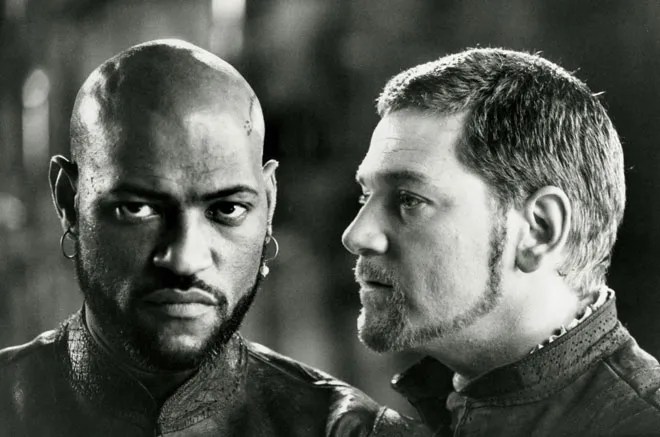
Defamation of character was a staple of Shakespeare’s plays. Here’s Iago (Kenneth Branagh) poisoning Othello’s (Laurence FIshburne’s) mind against Desdemona in Oliver Parker’s 2011 film adaptation of Othello.
https://archive.jsonline.com/entertainment/arts/snodin-fails-to-bring-iago-to-life-8n3h5hd-136442388.html

Thanks for the Mischief

Yesterday, we bid farewell to a woman as much a part of the city’s heart and soul as anyone could possibly be.

Others who have acted, painted, sculpted, written, sang, played music, or told stories in the various venues and platforms of this city gathered with her extended family at Unity on the River–an entity most welcome in the Ahavas Achim Synagogue–to pay tribute and share remembrances of Astrid Dorothy Lorentzson.

Celebrations of Life always leave us smiling. Tears are unavoidable, but re-living the vignettes of loved ones’ lives, their foibles as much as their strengths, has a way of turning tears to smiles.  Vignettes of Astrid took the concept to another level.  As one relative quipped before the 90-minute event ended, “We could have sold tickets for this!”

So it naturally was for an actress/playwright/director whose whole idea of being alive, according to all who spoke, was to make anyone within her reach happy. Stories of her penchant for turning the mundane into the memorable–a gourmet feast around a campsite fire, anyone?–at times turned the gathering into a comedy show.

Replete with a tagline:  ” Always time for wine!”

Back in January, following a talk at the Custom House Maritime Museum, her husband Jack Santos introduced us.  Brief as it was, it was telling. With my thumbnail photo appearing on the local paper’s opinion page about every three weeks for over 40 years, I’m accustomed to a friendly but guarded response when introduced.  A look, maybe a phrase, to the effect of, ya, I’ve got you pegged.

Not Astrid.  As we shook hands, an eyebrow raised and a wry smile slowly spread.  Just what she said I cannot accurately recall, but her voice was indelibly cheerful, verging on conspiratorial. Her expression made the message clear, a woman letting me know:

It takes one to know one.

That was the only time we met. A month later, husband Jack, posted on social media that he needed to drive to the Hudson Valley and was looking for a conversational companion.  I jumped at the chance.  In retrospect, I realize that I was actually filing in for Astrid who, just in recent years was his cross-country road companion countless times in every direction. So many photos from Wyoming made me wonder if it was their summer home. Or was Georgia a winter home?

Back in Newburyport by 9:00 the night of my day-trip with Jack, there was no mention of a nightcap at The Grog or Port Tavern.  Frankly, I’m now too old for that, but, again in retrospect, I see that he had a pressing reason to get home.

Compare that to a story told by her son-in-law, Martin, at yesterday’s celebration: Not too long ago, Martin and Jack’s daughter stayed a weekend with Astrid and Jack.  Conversation, flowing with wine, went late enough that Jack tired out and went to bed.  Before long, so did his daughter.  That left Astrid and Martin talking into the wee hours, with wine. According to Martin, Astrid at some point wanted to “go out,” but he stopped short of saying that they did.  If so, I think they live close enough to downtown to have walked, but maybe, like Martin, I should shut up now.

Except to marvel at Lisah Plumley’s rendition of “Angel of Montgomery,” the John Prine song that Bonnie Raitt soared into popularity, and Meg Raine’s rendition of the Celtic classic “Fields of Gold.” No matter how many times you’ve heard either song, yesterday they sounded not just new, but specifically about the woman we were hearing described. Pianist John Hyde’s accompaniment floated as if played on harpsichord, befitting both the occasion and the setting.

At the celebration’s opening, Jack sang Leonard Cohen’s “Hallelujah” accompanied by two ukuleles, one of which he played himself. The song, of course, is out of his vocal range, but it’s out of most everyone’s vocal range which is what makes it so beautiful and so cherished. What moved all of us yesterday was just the fact of his attempting it. Though out of tune at times, it set the tone for the touching stories, the comic relief, and the angelic music to follow.

Meg finished the celebration asking us to join in a call-and-response. She then sang lyrics, one at a time, that we repeated. Whether she made it up on the spot or it’s a template for such occasions that I was hearing for the first time, I don’t know. Began like this:

Thank you for your heart!

Thank you for your energy!

Thank you for your laughter!

Eventually, we heard and then sang this:

Thank you for your mischief!

Yes, Astrid, it takes one to know one.

-709-

Photos from Jack Santos’ Facebook page, compensation for serving as his co-pilot, February 26.

On Dubious Bridge

Nothing clears my mind so much as a long walk.

When alone, I’ll be lost in thought, so it’s not so much clearance of my mind as it is clarity for what is already there. So it is on my frequent treks in and out of the Plum Island Reserve, so close to home that my driveway is both the beginning and end of the trail.

And, yes, I am rueful at the thought that the only incline–rather steep at that–is that driveway awaiting me on my return.

Equally clarifying, and far more enjoyable, is a walk with good company, and so it is that I occasionally rendezvous with a hiking companion along the southern Maine coast. She drives down from north of Portland; I drive up from south of Portsmouth; and we meet at some coffee shop near the estuary trail or shoreline path we have in mind.

For these, I’m never lost in thought, but am always ready to remark on what I see and to hear what she thinks of what she sees. In nature, a difference of opinion is never cause for friction, but another road simultaneously taken.

Our last stroll was along the Fisherman’s Walk in York. Unlike Ogunquit’s Marginal Way which I described in a blog last year, this is not along the ocean, but inland along the York River. We were lucky to take that walk before Memorial Day, because it is a popular day-trip. The path includes a long causeway, ending with a footbridge onto a wooded peninsula, around which the tide hastens or stifles the outbound flow. We saw the receding tide hasten, or “suck the water out,” as my friend put it.

Across the “Wiggly Bridge” we went. Wavering side to side as soon as you set foot on it, this ancient contraption takes you back into another century as surely as it lands on a peninsula. My companion had me go first for the sake of a picture, but I used the occasion to turn to her with advice, something I learned from walking across the draw-bridge to Plum Island where every passing car and truck threatens your balance: Walk not with one foot before the other, but with them off to each side. Do that, and balance is easy.

Another advantage of these rendezvous walks is that we wind up in clam shack or seafood restaurant. On this day, we clocked 3.1 miles according to an app or whatever it is on my friend’s watch, so we didn’t mind putting some of the burned calories back on.

We made our way a bit further north in York to Fox Lobster where we wolfed down crab cakes and clam chowder at an outdoor table just downhill from the Nubble Lighthouse. If the walk is but a pretext to to indulge in these treats and the accompanying beverages, so be it.

Then comes the ride home. This gives me the chance to consider things brand new to me–both real and imagined, as physical as shaking foot-bridge and as abstract as bridging ideas that already shake on solid ground.

Balance? Bridge? Feet to each side? There’s a metaphor in there somewhere. No matter how secure the structure, there’s always the fact of suspension. We talk about suspension of belief, but crossing a bridge is suspension of ourselves. We never notice because we take it for granted. We trust those who built it, those who maintain it. Whether we’re enjoying views left and right or thinking of our destination on the other side, we barely think of falling into whatever there is below.

However, on this wiggly bridge, as on the one and only bridge to Plum Island, there’s the very real possibility of falling onto it. Hardly an existential threat, and a far cry from Paul Simon’s “troubled waters.” But it could hurt, and we may need help getting up.

Instead, let it serve as a reminder of the most basic law of survival in these least predictable times: We must pay attention.

Nothing puts my mind back in order like a long drive.

-708-

All photos by Carla Valentine, except for the Nubble Lighthouse photo by Edward Fielding.

Anyone for Pineapple Pizza?

When my next door neighbors came home one sunny late-afternoon, they saw me sitting out front, and one called out:

“Hey, Jack, want some pizza?”

That, of course, is a rhetorical question, no matter that I wasn’t yet hungry. “Well, yes, thank you!”

Then came a question I’d never before heard: “With or without pineapple?”

She may have wondered why I laughed before I answered. Eventually, I’d tell her that I’m about the only person I know (until she came along) who doesn’t condemn the very idea of pineapple on pizza as a crime against humanity.

Then again, it’s never a choice I make, being a pepperoni sort of guy.  My 10-year-old grandson, Lachlan, has apparently inherited this culinary gene. The rest of us might be taking slices from full-sized Florentines spread over the large dinner table, while, at the end of it, he hovers over a small pepperoni with black olives. With some effort, I pretend I’m an adult by settling for slices of basil and some other healthy things while resisting the temptation to snatch from him.

In restaurants, I always look for a specialty that catches my taste-buds’ eye, and pizza parlors are no different. At Flatbread in Amesbury, I order the “Punctuated Equilibrium” as soon as I walk in the door. No pepperoni or sausage there, but a mouth-watering vegetarian delight with caramelized onion, Kalamata olives, roasted red pepper, goat cheese, and rosemary baked into the thin crust.  Anytime I have an out of town visitor, we go there.

Worth noting here that I am exactly one-half Italian by descent, with two grandparents from the bottom of The Boot who boarded a boat that brought them to Ellis Island. Despite–or maybe because of that–I never heard of pineapple on pizza until I was in my mid-20s and living in (of all places) South Dakota.

Well, it was a college town, and pizza joints in college towns are like food vendors at an outdoor summer fair. Stands to reason that one would seek to create its own niche by concocting something no-one else had. So there I was, halfway across the USA, sampling pizza topped with ham and pineapple in its thick tomato sauce, named for a place beyond the west coast and halfway across the Pacific Ocean: Hawai’ian Pizza.

Put the “Hawai’ian” part aside, and it would have been an ideal main course had there ever been a feast joined by my maternal grandparents with my full-blood Irish paternals. Both my grandfathers had passed before I arrived, so it never happened, but I do know that feasts on the Garvey side were often headlined by Virginia-baked ham under a pineapple glaze, while on the Butruccio side everything was covered in tomato sauce. Even the bread was intended as a dip.

What I had in Dakota wasn’t bad, but it never became a choice. As way led onto way back home, I never made it to Hawai’i to see if it–the tropicalized pizza, not the chain of islands–was real. Closest I came was in Lincoln City along the Oregon coast, a place that served Hawai’ian pancakes with pineapple and macadamia nuts. This was a stop while hitchhiking, after the breakfast crowd left. The proprietor spotted my cardboard and magic markers, and after making the pancakes and bringing them to me, took those items off my table, sat at the table next to me, asked where I was going, and made the sign himself while I dined: “Calif” in nicely shaded letters. The memory makes me wonder why I didn’t stay in that town and found work.

Instead, like the Prodigal Son, I rumbled home, or just downriver from my heavily-Italian-populated native Lawrence. No fatted calf for me, and pineapple pizza was nowhere to be found. But I guess that’s only because I never looked. I do have one vague memory of some function in a church hall maybe 20 years ago where it was on a table with several other pizzas. No one was taking it while the others all went fast, so I helped myself.

Oddly enough, I have over these 40+ years on Plum Island, put together some unlikely combinations of my own. In 2009, I invented the “molasso-burger,” a huge hit with friends who join me here every summer for a taste. And a few years ago, I started making apple-cheddar omelets. That craving came from a Chicago restaurant in 2008, and I have since seen it on two New England menus.

Molasses in burgers? Apples in omelets? Yes, Angela, pineapple on pizza it will be!

When she handed it over, it was still warm from Otto’s ovens in the building with Leary’s on Merrimac Street, and free of ham, which may be what makes it a better choice. Just right for that warm day, accompanied by an IPA, and sure to be even better on a hot day with a pilsner or two.

-707-

Heroic Italian volunteers removing the pineapple slices from a contaminated pizza.
Photo and caption from The Italian American Page on Facebook.

Big Beautiful Bullshit

The name all by itself should have been enough to kill it.

George Orwell would have called it doubleplusgoodspeak, but if you are willing to accept a name such as “Big Beautiful Bill” as anything but an insult to public intelligence, you might have at least wondered why the Republican-led US House of Representatives scheduled the vote at 1:00 am.

They pretty much had to wait until it was past all kids’ bedtime on the Pacific Coast. If politics is analogous to entertainment, then what happened last night was XXX-rated.

Call it euphemism if you want, and put your American audience to sleep by the third syllable. Most euphemisms serve to soften. “Big Beautiful Bill” is outright deceit more in line with “pacification of villages” that, as Orwell showed, hid destruction and murder.

Better to describe it with a striking comparison. The Republican name for what passed by a single vote over a unanimous Democratic vote is a gold-plated doorknob on a porta potty.

If you want euphemism, you’ll hear it from every news source–left, center, right–reporting on the bill:

Big Beautiful Billions will be cut from Medicare, Medicaid, Family Assistance, Farm Assistance, Veterans Benefits, Environmental Protection, Weather Services, Park Services, Worker Safety, Consumer Protection…

The disoperative word there is “cut.” What? Does the money disappear? No. The honest word there would be “re-allocate.” Much of what the rich now pay in taxes, already made ridiculously far short of their fair-share by Pres. You-can-have-it-all Reagan, will be re-allocated back to them. The real “cuts” will be tax breaks for the richest of the rich–whose businesses will also benefit from the weakening and termination of laws to protect consumers, workers, and the environment. Bill, Baby, Bill!

No time to list every target in the Republican Party’s bid to turn the US Treasury into an ATM machine for their donors, so rather than list the targets you’ve heard of because they will effect you and your neighbors’ wallet–even as the cost of eggs remains high–there’s one very Big but not at all Beautiful provision that needs more attention.

From Newsweek:

A provision “hidden” in the sweeping budget bill that passed the U.S. House on Thursday seeks to limit the ability of courts—including the U.S. Supreme Court—from enforcing their orders…

The provision “would make most existing injunctions—in antitrust cases, police reform cases, school desegregation cases, and others—unenforceable,” Erwin Chemerinsky, the dean of the University of California Berkeley School of Law, told Newsweek. “It serves no purpose but to weaken the power of the federal courts.”

So much for three branches of a democracy. Checks and balances? Yes for the checks for Republican campaigns, but the balances are for suckers and losers, you know, like habeas corpus and a ban on emoluments, a word that the Republican president ridiculed at length–with mocking, high-pitched, pronunciations–in his 2020 and 2024 stump speeches.

Don’t know about the 1,000-page BBB, but “emoluments” appears with terms such as “checks and balances,” “the judicial Power of the United States,” and “habeas corpus” in a single, much-shorter, and completely honest document.

That would be the United States Constitution, which emphasizes each one of those provisions that the BBB disdains, and that our Republican president ridicules.

No wonder he added all those gold-plated ornaments to the oval office.

-705-

Possibly the most egregious example of a name intended to hide–or deny, or deceive–was intended for the nuclear-powered attack submarine commissioned by the US Navy in the early years of the Reagan Administration. The Navy wanted to name it the USS Corpus Christi, but the Catholic Church went, well, ballistic. Since the ship would be based in the Gulf Coast Texas city of that name, the Navy added “City of…” to the front of the name, and the objections died down.
https://nara.getarchive.net/media/the-nuclear-powered-attack-submarine-uss-city-of-corpus-christi-ssn-705-approaches-9285b4

NPL: The Murray Report

Near the end of April, I received a confidential report, never mind how, dated March 19.

Why me? Well, I was one of the petitioners to the Newburyport City Council for an independent investigation to determine what the mayor, his (then) chief-of-staff, and the director of Human resources did–and, as the report shows, did not–do that resulted in the dismissal of eight volunteers from the NPL’s acclaimed Archival Center, and the forced resignation of the center’s director.

That, and no doubt because I write guest columns for the local newspaper, occasional essays for an on-line platform committed to local issues, and a blog open to anything that needs to be open.

Whoever put this in my hands must have hoped I’d make it public, but as a petitioner, I believe I was obliged to let the Council have its say. While the Council’s summary, including the full two-paragraph conclusion of the report, were full vindication of the vols and an indictment not of library staff, but of the aforementioned trifecta in City Hall, it included few details.

Such is the nature of a summary, but this one, unfortunately if unwittingly, gave the impression of being skewed in favor of the vols.

If that was any further from the truth, it would be a tweet from Donald Trump.

Because both summary and conclusion heavily favor the vols, it’s easy to miss the report’s closing line which includes the librarians, not as perpetrators of defamation, but as having the “action and inaction” of the Reardon Administration “drag out… at (their) expense.”

Sounds impossible? Read entries 30 through 49 in the timeline. Read entry 34 twice.

And now that the City Council has had its say, why not read the whole damn and damning thing?


About the text:

On 22 pages, what I received had been scanned before it was printed out, making it impossible to trace, and wreaking havoc with the formatting.  What I then scanned into this electronic file is the result of my own cut and paste re-assembly.

Mostly I removed footnotes from the middle of unnumbered pages and compiled them into four pages of their own, which I lettered A-D.  Those cuts account for the blank spaces you’ll see in the first 10 of 20 pages I myself numbered.

I also had to reconnect breaks in the text that were at times mid-sentence.  It appears that I got them all except one in footnote 13, page C.  Given the context, there’s a good chance that just a simple phrase such as “in her office” is all that is missing from that gap.

The attachments referred to in the document were not in the envelope I received. Most of them were public in real time, such as newspaper articles and statements in city council meetings. As far as I can tell, the only non-public attachment is an email to the investigator from someone at the center of the controversy declining to be interviewed in person or via email.

-706-

Mistaken for a Magician

About time I expressed heart-felt gratitude to many patrons of the Screening Room who apparently believe that I can tell how old people are just by looking at them.

Quite flattering, but of course it isn’t true, as many folks find out when they hear me charge them general admission instead of the senior rate for which they qualify.

How else to explain that they don’t say it ahead of time when it would avoid confusion during the transaction? Are these the same people who wait to use a directional signal until already making a turn?

What started it? Have Newburyporters attending Renaissance faires over the years seen me listed in a program as a “musician,” but, with just a glance, mistook the word for “magician”? Was there a typo?

Am I mistaken for “Merwin the Misfit,” a popular wizard on the renfaire circuit? He and I do bear some resemblance as bumbling old fools both on and off the stage, and a flute could be mistaken for a wand.

I’d ask the Newburyport City Council to investigate, but by the time they released a report, the only people asking me anything, if I’m lucky, will be nurses and attendants in some assisted-living facility.

And so, rather than seeking the source of my so-so sorcery, I only seek to put a stop to it.

If I fail, it could be the end of my sanity, what little I have, if I ever had any. You might ask, “What’s the big deal?” Or object, “It’s just a two-dollar correction!”

Big deal? The big ordeal is when we assume that someone is older than they are. After seeing that mistake made just once, I’m taking no chances of being near it again.

If Methuselah is rolled into the Screening Room wearing a name tag and doesn’t say the word ‘senior’ or some immediately recognizable synonym, I’m charging full price.

And as for that two-dollar correction: That was simple when we handled only cash and could hand over the extra dollars in change. It did require reattaching a ticket to one roll, and taking one from the other. Sounds so easy, right?

Have you considered what it would be like at the ticket counter of a cinema where 90 percent of your customers arrive within ten minutes before the film is scheduled to begin?

Even at that, I’ll admit the problem wasn’t such a nightmare until we began accepting credit cards.

Anyone who can count can change a twenty or a fifty in five seconds. Hand me a credit card, and it’ll take twice that to ready the swiper for the card, a few more for the card to register, and another ten for the swiper to process the sale. Want a receipt? Add another five seconds.

Plus, if instead of a simple yes or no for the receipt, you hem and haw about the ethical issues of excess paperwork, add another five or ten if I waste time trying to accommodate you.

Also happens with popcorn when I ask, “Would you like butter?” How many times do I hear what a doctor has said, or guesses at how many calories someone has already consumed that day, or worries over ruining an appetite? How many times have I had to stop and say:

“I can’t tell if that’s a yes or no.”

And what an extra effort it takes when someone buys a $3 bag of popcorn, and then hands me back a card just used for the purchase of tickets–an effort not to bag and sell it, but an effort not to explode.

With or without the questions of age or butter, these scenes with credit cards are repeated over and again before every show, often with growing lines that stretch out the door and toward Port Tavern.

After a series of cards just minutes before show-time, a cash payment is an act of mercy. I often thank those who use it, projecting my voice over their heads to the line in front of me. And then I repeat it a second time.

This helps, and most patrons smile and laugh as they dive back into wallets and purses to find tens and twenties.

Due to the paralyzing reality of credit cards in a movie theater, I go as fast as I can, and I can count fast. Many people, especially younger folk seem to find it amazing, but it’s no more than simple arithmetic, always with the same numbers: 12, 10, 5, 3, 2.

They look at me and praise me like I’m a magician.

Again, I am very thankful for the perception. Very flattering. A very high compliment that might be intoxicating were I still in my thirties or forties.

No way I’ll ever conjure up those numbers again.

-704-

Hamm Lynn, Hyper-Piper (or is it Merwin the Miserable?) at King Richard’s Faire.
Photo most likely by Paul Shaughnessy, but there are other possibilities.

Much Ado about 77 Cents

Never heard of anyone else who does this, but I like to pay bills as soon as I get them. In full.

When I landed on Plum Island 43 years ago, I moved into an off-season rental right on the beach, knowing that I had nine months to make other arrangements. That caused me to rent Box 145 in the Newburyport Post Office. I made it a habit to have my checkbook with me so that, when I received a bill, I could write and mail a payment before I left the building.

Before 2017, I always paid my credit card balances in full every month, never paying interest. In March of that year, my 2004 Hyundai Elantra was beyond repair, and I was determined to buy something brand new but economical, with a standard transmission, unused, and free of anyone else’s wear and tear. Coincidentally, my own wear and tear ran up a considerable hospital bill, and my ASUS laptop decided to follow my Hyundai to the graveyard.

For a few years, my choice was to carry credit or declare bankruptcy. At times I sacrificed to make minimal payments. Then came the Covid shutdown and its stimulus checks followed by weekly checks to keep us solvent. And just like that, the Nissan Versa was mine, and I was back to paying bills immediately, in full, as well as paying rent two months at a time for the mere convenience for thinking about it just half as much.

Yes, I always prefer using my checking account rather than plastic, and for many things–utilities, heating oil, most medical bills–it’s rather easy to do on line. But every now and then, there’s a site as impenetrable as Fort Knox–quite the conundrum for someone trying to send money in rather than looking to take it out.

Last week I was so pre-occupied with a long-simmering Newburyport controversy coming to a boil that I tossed two bills into the freezer, so to speak. Thought little of it: One was a Massachusetts toll for $3.70; the other, a health insurance co-pay for prescription drugs totaling a whopping 77 cents.

Yes, you read that right, and no, that’s not a typo.

This morning, I easily paid the toll with a credit card on line, as I have in the past. The $0.77? Well, it’s like this:

Into January of this year, I was a member of UnitedHealthScam and was surprised to learn that they had discontinued dental coverage for the plan into which I had signed. Sure, the “change” had been announced in the small print of a renewal somewhere along the line, but I’m so naive, I thought something that vital would be more pronounced.

In February, I switched to Aetna, so far a great move that has saved me a few hundred bucks at least. However, Aetna has an arrangement for prescription drugs that, though less expensive, issues a bill for co-pays every three months. First one for me was in my hand this morning: 77 cents.

After at least a half hour trying to convince the website that I am who I am, born on March 18 every time I was asked, I got on the phone, listened to the menu, followed all the prompts, listened to Vivaldi’s Four Seasons (“Winter” I think) while on hold, and immediately told the woman who answered: “No way I’m writing a check for 77 cents!”

She didn’t laugh, but she was cheerful and eager to please me while referring to the 77 cents as if it was 77 dollars or 700 dollars. I added that I’d gladly pay by credit card, and would pay her right then if possible. She said she’d have to transfer me to a “Senior Finance Officer,” or some such thing, and I laughed, “Sure!”

That meant I had to go through the birthday/zip code/whatever ID process yet again. When the second woman answered, I said, “This is much ado about 77 cents!”

The joke still did not register, though again the Aetna agent was cheerful and ready to please. I tried again: “The postage on the bill you sent me is almost as much as the bill itself.” But she also treated the chump change as if it was the equivalent of a car payment, a down-payment on a modest home, or a ticket to a Springsteen concert. With a friendly laugh as if we were together on a patio sipping pina coladas while watching kayaks on the marsh, she explained the “policy and procedure” of quarterly billing.

After she took my credit card info, I asked if, the next time I receive a bill for so little an amount, could I send a check for $10 or $20 and have it be an account they could draw from until it ran out. “Yes,” she agreed, and then she repeated what I had said, and then what she had said about policy, and then that 77 cents would be charged to my Discover card, and then that Aetna was delighted to have me as a customer, and then that the prescription drug plan called for minimal co-pays, and then reassured me that my 77 cents was paid, and then repeated that I could send more than the next amount, and then…, and then…, and then…, until she got to “Have a nice remainder of your day!”

Not that many years ago, I’d have answered, “Ya, what’s left of it!” But now I laugh: Ever notice how long many of these agents, from all kinds of companies, keep you on the phone long after a transaction is completed?

A good reason to pay bills right away, in full, without ever getting on a phone.

-703-

… whatever you want, but for God’s sake, say Good Bye when we’re done and let me go my way!
Answer to the question begged is on the back:

Soundtrack for a War on Thought

As someone who continues to drive a delivery van all over New England one day a week into my semi-retirement, I’ve put considerable wear and tear on my vocal chords cursing drivers who hit their horns for no good reason.

Not to mention friends and acquaintances who do it to say hello while driving by me during my lost-in-thought walks in the Plum Island Reserve.  Somehow, their friendly smiles and waves immunize them from seeing my nervous system shatter like museum glass. Are threats to murder still a crime if no one hears them? If so, I might as well turn myself in.

I’ve written to the FCC asking for a ban on car horns and sirens in radio ads due to the false alarm that might cause someone to reflexively hit the brakes while the driver following is grooving along to “Baby, You Can Drive My Car.”

As I expected, the answer began and ended with “First Amendment.” Ya, sure, selling insurance and beer is exactly what Jefferson had in mind when he signed that thing!

Despite all this, I now look to rationalize my near-weekly participation in protests along main drags, such as Newburyport’s High Street, intended to induce passing motorists to honk their horns in approval.

Yesterday’s gathering was one of several called “Stand Out” at key intersections along Route US One stretching about a dozen miles from the Newburyport Rotary to Topsfield’s Fairground.

Scheduled for just one hour, I was on time to join two dozen folks at the intersection of Hanover Street where Newburyport meets Newbury and watch about another three dozen join us. Everyone else had a sign, while I sported my “Stand with Ukraine” shirt, keeping my hands free for a thermos full of coffee in one and a paper cup in the other.

The signs were much the same as those in Peterborough N.H. a month ago and back on High Street a couple weeks after that–except for a few “8647” signs prompted by news of James Comey (of all people!) displaying the numbers outside his home and drawing threats of investigation from Trump’s personal legal team, formerly known as the FBI.

Irony here is mind-numbing. Comey was once head of the FBI, and with a single ill-timed and uncalled-for press release while in that position, did more to give Trump the presidency in 2017 than anyone else.  As for 2025, Merrick Garland gets that distinction hands down even if it may be that his hands, like his idea of being Attorney General, never move.

Our hour went well, as at least three-fourths of those passing by sounded a horn or flashed a thumbs up. Took fifteen minutes before we drew our first middle finger or F-bomb, and I had counted just six at the 45-minute mark.

That was when I remarked to folks nearby that each bird and bomb seemed to be accompanied by a revving of the engine, in some cases accelerating a car, a pick-up, or a motorcycle through the intersection.  Noticed this in Peterborough last month along US 202 south of the town center.  Unlike our signs–or shirt in my case–and the honking approval of them, there’s no ideology, no value, nor anything humane about a revved engine, just power for power’s sake.  Nor is there anything thoughtful about a flipped bird or an F-bomb, just dismissal–which is a refusal to think.

May have taken 150 years, but President Grant’s prophecy has come true. America’s Second Civil War is not between geographical regions, but…

… between patriotism and intelligence on one side, and superstition, ambition, and ignorance on the other.

Put simply, we are in a war on thought.

As if on cue, a line of about ten motorcycles approached from the south.  One pulled over to ride in the breakdown lane which we lined.  He wasn’t going fast, though he wasn’t any slower than his fellow bird-flippers. Nearest he came to anyone was perhaps three feet, which is close enough.

After his pathetic attempt at intimidation passed, we reminded each other to be alert, and since our hour was nearly up, there wasn’t any concern about a return visit.

When home, I looked at a picture sent by my cousin of the sign she took to a rally in Newtown, Conn. (Yes, that Newtown.) On it she put a line from Thomas Jefferson in 1824:

I tremble for my country.

The First Amendment, as his buddy Madison wrote it and as he signed on, may well allow for riders of machines they never imagined to rev engines and flip birds.  Things unknown to them are, of course, not specified, but the right to”peaceably assemble” is.

Intimidation, which has become MAGA’s MO, is not a First Amendment right.  But it is a prominent tactic from the playbook of fascist movements that swept Europe a century ago. A tactic designed to erase civil liberties such as our Bill of Rights protects.

In America, there are laws against all forms of intimidation precisely because it discourages, interferes with, and suppresses the rights of others, as has been happening since the advent of Trump and MAGA all across this country in school committees, polling stations, statehouses, city halls, town halls, health clinics, places of worship.

And to think that I stood in Peterborough a month ago, on High Street two weeks ago, and left home today feeling guilty about encouraging drivers to unnecessarily sound their horns. As soon as I confessed this to the folks near me today, one woman set me straight: “What could be more necessary than this?”

I thanked her for reminding me of what I thought I knew.  I suspect that a fair number of drivers passed by us without hitting horn or gas, without a thumb up or down, wondering why we were there, why we bother, why we even worry.

Just as it is often sounded to wake up another motorist, the horns we sound are to awaken those who have yet to pay attention. In 2025, we all have good reason to tremble for our country, but trembling is not enough.

Any sense of patriotism demands that we act on it.

-702-

An early photo taken as folks were just arriving. I’m down at the end, hidden by the “Defy the Lie” sign, but my Nissan Versa is visible just above “Resist.” Photo by Richard Lodge.

An Un-American Nightmare

This has created a toxic work environment. I’m afraid to speak up. I’m afraid to defend myself, especially with what I’ve read about the library incident. I feel like it’s going down the same path.

Mary Jo Haley, Parking Enforcement Supervisor, May 5.


If you want relief from all the wrecking ball news from the White House in Washington, you’ll need to avoid the serial implosions from City Hall in Newburyport.

Team Trump has nothing on Team Reardon when it comes to disappearing, dismantling, and disabling public services, not to mention demoralizing public servants.

On Wednesday last week, the Daily News’ front page headline blares:

Investigator: Newburyport library volunteers defamed by city officials

The story reports the City Council’s release of the conclusion reached by an independent investigator, including two most shocking, if carefully worded, lines:

… the actions and inaction of the City, through the Mayor, the Mayor’s [former] Chief of Staff and the Human Resources Director, directly contributed to or created the situation that allowed for (the volunteers’) dismissal and defamation.

Followed by:

The public release of the librarians’ letter without any context or investigation acted as an endorsement of the allegations included in the letter, many of which they were aware were false or misleading. 

Next day, the DN’s top front-page headline was more restrained:

City clerk reveals tensions with mayor

“Tensions”?  Members of the clerk’s office sounded like they were caught in a Medieval vice pleading for the council to intervene in “a hostile work environment.”  One fought back tears describing “retaliation” for not fixing parking tickets issued for vehicles in handicapped spaces.

After 14 years in her position with a clean record and praise from both former and present City Clerks, Mary Jo Haley was suddenly the subject of two complaints, one from a 49-time offender, regarding tickets the mayor wanted dismissed.

No wonder she was reminded of Mayor Fix-it’s butchery of the library.  Head Archivist Sharon Spieldenner had a clean record and praise from numerous researchers, resulting in her being cited in the acknowledgments of some 30 books.  So went her first dozen years before Reardon “paused” the volunteer program.

Soon after, she has three disciplinary write-ups.

The investigator’s report reveals the mayor’s retaliation against local historian Ghlee Woodworth, an occupation that makes her a natural friend of an archivist. How that ballooned into the resignation of his own newly-appointed NPL director, the dismissal of all archival volunteers, and Spieldenner’s forced resignation, I’ll leave to the report.

After all, City Council President Ed Cameron said that an “executive summary” will be released this week, and as one of the signers of the petition, I should abide the process—unless it’s white-washed.

Then again, why did it take seven weeks before we heard anything of a report dated March 19?

Seven weeks? That’s nothing. Rip Van Cameron stalled the start of the investigation six months, giving the then-Chief of Staff time to bail out.  He did more to spread the defamation more than anyone else. Though they knew of it, the mayor and Human Resources Director Donna Drelik looked the other way.  No sooner did Andrew Levine announce that he was moving to Western Massachusetts, than voila!  Time to investigate!

The mayor must have blindly thought that all blame could be pinned on his former donkey.

As if to oblige him, the council’s “executive” summary, released just last night, omits any mention of Reardon’s targeting of Woodworth, thereby hiding the petty, political motive that has consumed NPL.

As for the boiling turmoil in the clerk’s office, see it for yourself in last week’s meeting of a subcommittee of the City Council.

The video is about an hour and a half.  Start at the 50-minute mark when the recently retired City Clerk testifies that he enjoyed a professional working relationship with previous mayors for most of his 18 years in City Hall.

That ended, he says, about three years ago. Richard Jones then urged the Council to intercede, reminding them that the clerk’s office reports to the Council, not to the mayor.

The current mayor is then described by the new City Clerk:

I pass him in the hallway. I say hello to him. I greet him, and he walks by me like I am invisible.

Added Haley, who works out of the Clerk’s office:

I feel I have a target on my back, and I’m afraid of being retaliated against by the mayor’s office again.

 On Friday, the day after news of the Clerk’s office exploded, readers of The Townie had a taste of the library report finding regarding the personal impact of the Reardon Administration’s abuse of power.

In an essay that simultaneously induces tears and rage, a daughter of a volunteer in the Archival Center every Friday morning for eight years, writes:

I’m not sure I will ever be able to understand why my mother was subjected to an un-American “guilty until proven innocent” nightmare for the past two years.

On the same day, a White House advisor openly said that the administration is considering ways to eliminate the Constitutional right of habeas corpus for those they want to deport.

In plain English, that means people would be guilty as soon as charged.

In Newburyport, it means that the city is now a microcosm of our national macrospasm in more ways than one.

-701-

https://us02web.zoom.us/rec/play/rZ39AYlrOEmJuOt8Jx8CnyGaSJRP8uhjCSfevRFBED_zsJczOcxkA-lDL-sf2KoDnQNRzYSEyfEYIRZj.eAIRjinExpVaetPR?

Photo by Ima “Bootleg” Sleuth.